It has become increasingly rare to find products that are fast, lightweight, performant, and responsive without unnecessary AI features forced down your throat, while still offering integration options for those who want them. Products that provide genuinely useful features to most users and maintain fair pricing for power users.
Zed, Obsidian, and Helium are prime examples of what I'm talking about. These are the three pieces of software I used consistently throughout 2025 and will continue using in the years ahead. These three software were also the reason I am writing this article , its to showcase what I think of software as a whole and it doesn't have to be what other people force it to be , at least this is what I think is happening with most of software currently around the globe.
In an era where every app wants to be everything to everyone, these three tools stand out by doing the opposite: they focus on core functionality, respect user choice, and prioritize performance over feature bloat. They represent a philosophy of software development that seems almost forgotten in today's landscape.
To understand why I think these tools work so well, let me share a principle that shaped my entire view on software design.
Why Simple Blocks Beat Complex Systems
One of the best examples I can think of to explain my perspective is SpaceX's Raptor engine. What SpaceX and Elon Musk achieved with the Raptor engine is nothing short of an engineering marvel. But how did they do it? It comes down to a simple fact: complex building blocks aren't scalable, but simple ones are.
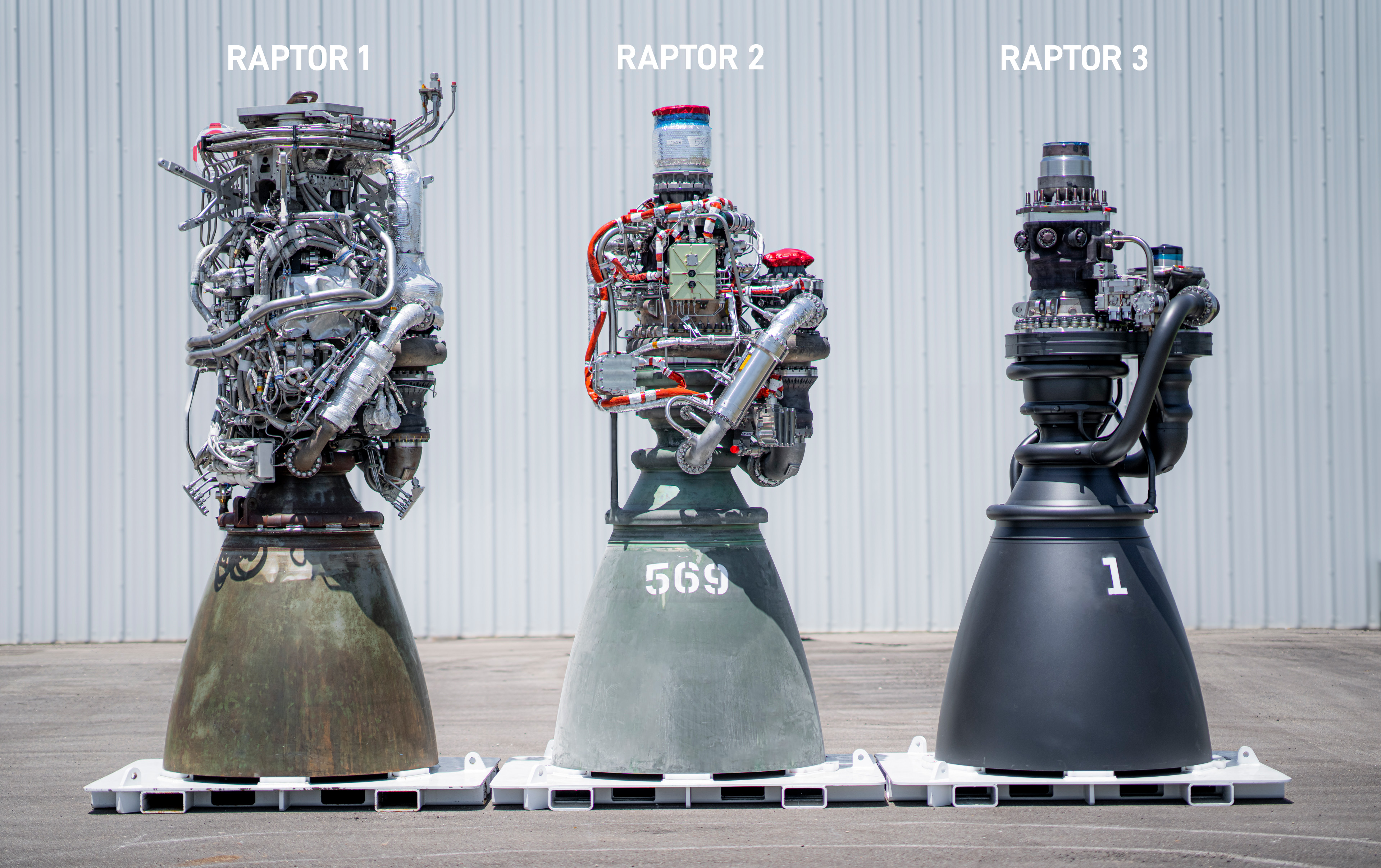
The Raptor engine succeeded where others failed because SpaceX stripped away unnecessary complexity. Instead of building on top of decades-old aerospace assumptions, they went back to first principles. They asked: what do we actually need? What can we remove? The result was an engine that's more powerful, more efficient, and ironically, simpler to manufacture at scale than its predecessors.
Think of Lego blocks. A single block looks simple, but put together 100 of them and you can create a miniature house. Use a few thousand and you can build a 1:1 scale car. The beauty isn't in the complexity of individual pieces. It's in how simple pieces combine to create sophisticated systems. What I'm saying is that complex systems don't increase performance or productivity. instead, they slow everything down, bloat the system, and add features nobody actually needs.

This principle applies directly to software. When you start with complex, tightly-coupled components, every new feature becomes exponentially harder to implement. The codebase becomes fragile. Performance degrades. But when you build with simple, composable pieces, you get the opposite: systems that are maintainable, performant, and can evolve without collapsing under their own weight.
The Tools That Got It Right

Zed is an open-source IDE built entirely from scratch in Rust. The moment you open Zed, you'll notice it's different very different from any conventional IDE you're using right now, whether that's a VS Code fork or a JetBrains IDE.1
It's blazingly fast and lightweight to the point where it feels more like a text editor than a full IDE. Files open instantly. Search is near-instantaneous. The UI doesn't stutter or lag, even when working with large codebases. This isn't magic it's the result of intentional architectural decisions and the discipline to say "no" to features that would compromise performance.
Using Zed makes you wonder what the hell was wrong with IDEs up until this point, because going back to VS Code, Windsurf, or Cursor feels almost criminal. You suddenly notice the half-second delays, the occasional freezes, the memory bloat. These things become invisible when every IDE suffers from them, but once you experience something better, you can't unsee it.
The answer is simple: Zed's creators actually care about what users need. They didn't start by asking "how can we add AI to everything?" or "how do we lock users into our ecosystem?" They asked "what do developers actually need to write code effectively?" The result is an IDE that feels like it was designed by developers who code daily, not by a committee optimizing for engagement metrics.
At the same time, they give power users the option to pay for advanced features if they want them AI assistance, collaboration tools, and cloud features are available but never mandatory. Both sides win: casual users get a fast, free tool that respects their time and machine resources, while power users can unlock additional capabilities without feeling nickel-and-dimed.
I've been using Obsidian since 2023. It's been my go-to note-taking app not because it has magical features that transform my life, but because it's lightweight, flexible, and doesn't shove AI across every corner of the interface. It operates like open-source software without actually being open source.2
What makes Obsidian special is its philosophy: your notes are just Markdown files stored locally on your machine. There's no proprietary format, no cloud lock-in, no vendor that can suddenly decide to sunset the product and hold your data hostage. You own your notes completely. If Obsidian disappeared tomorrow, your files would still be readable by any text editor. This kind of data sovereignty is increasingly rare.
I use Obsidian for both personal and work notes. Philips has provided me with the entire Microsoft suite—OneNote, Teams, SharePoint, the works. But I'm still drawn to Obsidian simply because it feels snappy. It's offline by default in areas with poor connectivity, and without the constant anxiety of whether your notes are syncing properly. It's lightweight enough that it doesn't compete with my actual work applications for system resources. And it's flexible enough to adapt to any workflow, whether you're writing technical documentation, maintaining a personal journal, or building a knowledge base with thousands of interconnected notes.
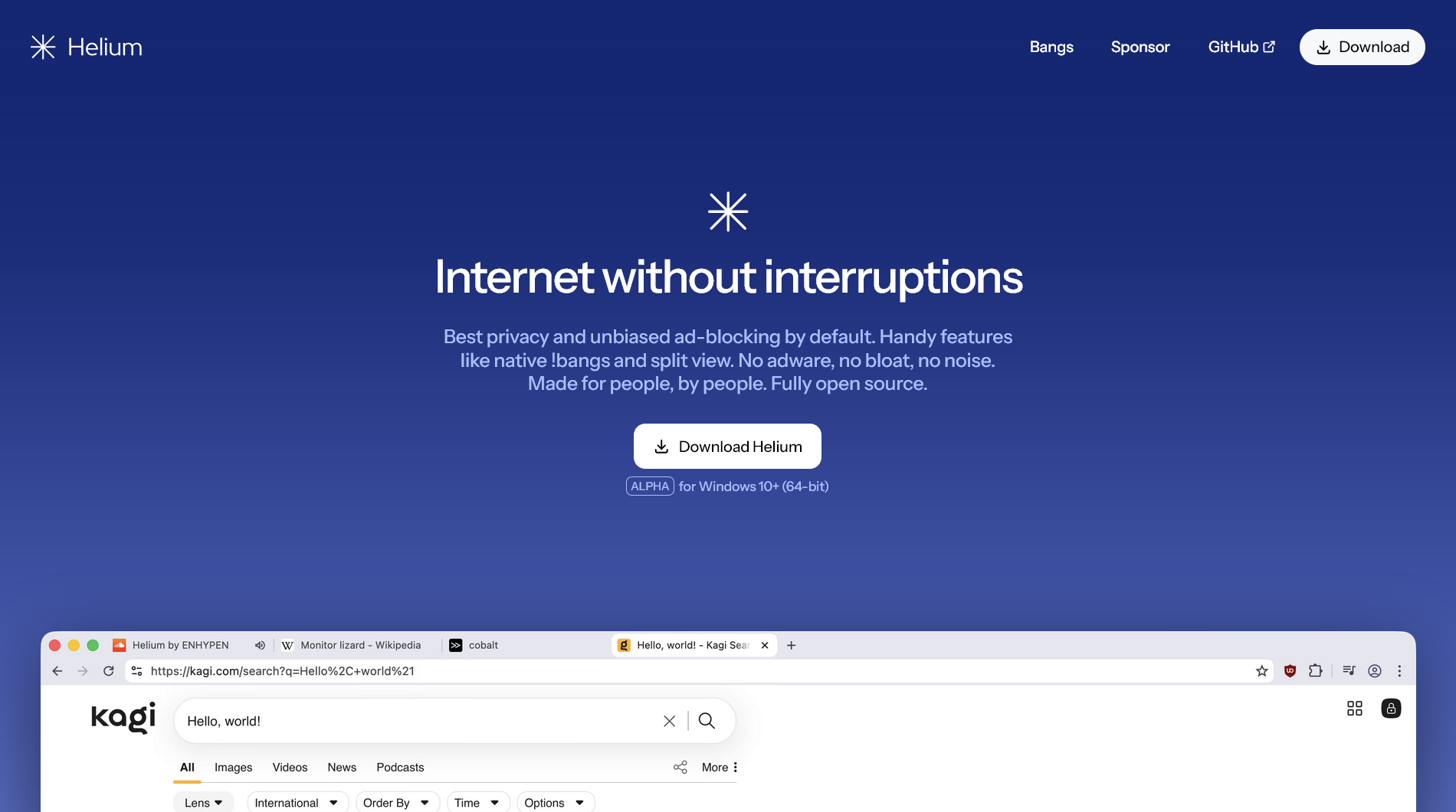
I love testing new web browsers. Back in 2024, I was hopping between browsers every month , I can confidently say I've tried almost every single browser that exists or works on my operating system. Arc, Brave, Vivaldi, Firefox forks, Chromium variants you name it, I've given it a fair shot.
It's 2026, and browsers have become a mess. In their desperate attempts to retain users and differentiate themselves, companies are adding features we don't want. Sidebar AI assistants that pop up uninvited. Cryptocurrency wallets nobody asked for. Social features in a tool designed for browsing the web. Shopping assistants that inject themselves into every e-commerce site. The browser has become a battleground for attention and monetization, and users are caught in the crossfire.
I discovered Helium in November last year, and I keep coming back to it. It's free from all the bullshit Google forces on us because its core is built on ungoogled-chromium. That means you get the Chromium rendering engine—which, let's be honest, has become the de facto standard for web compatibility without the Google tracking, forced account sign-ins, or data harvesting that comes with Chrome.3
But Helium isn't just ungoogled-chromium with a new name. It has its own quality-of-life features that actually matter: sane defaults for privacy, sensible tab management, and interface refinements that improve browsing without getting in the way. It's fast because it's not running background processes to serve ads or collect telemetry. It respects your system resources because its developers understand that a browser shouldn't be the most demanding application on your machine.
Why This Matters ?
I would highly recommend trying these apps at least once to understand what I mean about how software should be built. In a world drowning in bloatware, these tools are a breath of fresh air , proof that software can still be made with integrity, performance, and user respect as primary goals.
These three applications — Zed, Obsidian, and Helium — represent what I believe software should be in 2026 and beyond. But more importantly, they prove that an alternative path exists.
We've been conditioned to accept that modern software must be bloated. That every app needs AI integration whether you want it or not. That privacy is a premium feature. That speed and efficiency are somehow luxuries rather than baseline expectations. We've normalized 500MB Electron apps for simple tasks, minute-long startup times, and features we never asked for cluttering our interfaces.
But it doesn't have to be this way.
The question isn't whether better software is possible these three tools prove it is. The question is whether enough of us will demand it, support it, and refuse to accept less. Every time you choose a tool like Zed over a bloated alternative, you're voting for a better future of software. Every time you recommend Obsidian to a colleague drowning in OneNote's sluggishness, you're spreading the idea that software should serve users, not the other way around.
So this is what I feel software should be.
-
Zed is a next-generation code editor built for performance and collaboration, featuring real-time multiplayer editing and GPU-accelerated rendering. ↩
-
Obsidian is a powerful knowledge management app that stores your notes as plain Markdown files on your local device. Free for personal use with optional paid sync and commercial licenses ↩
-
Helium Minimal web browser built on ungoogled-chromium, offering a fast, privacy-focused browsing experience without Google's tracking or bloat. ↩